



Tag Archives: multifamily real estate

Fed Rate Hold Multifamily Impact: What Investors Need to Know

Fed rate hold multifamily

The Fed rate hold multifamily investors have been watching closely is now official. The Federal Reserve concluded its latest meeting by maintaining the federal funds rate at 3.50%–3.75%, marking more than six months without a change in monetary policy. While the decision itself was widely anticipated, the broader implications of this meeting extend beyond the rate announcement. It was the first Federal Open Market Committee (FOMC) meeting chaired by Kevin Warsh, and the messaging from the Fed suggests a potentially meaningful shift in how monetary policy may be communicated and implemented moving forward.

A New Chair, A Familiar Decision

The FOMC unanimously voted to leave rates unchanged, continuing a cautious approach amid a complex economic backdrop. Inflation has moved higher in recent months, driven largely by energy-related pressures, while economic growth remains relatively resilient. Rather than reacting to short-term fluctuations, the Fed appears focused on gathering additional data before making its next move.

Notably, Chairman Warsh emphasized that the Federal Reserve will no longer provide the same degree of forward guidance that investors have become accustomed to over the past decade. Instead, future policy decisions will be increasingly data-dependent and evaluated meeting by meeting.

For investors, this means markets may need to become more comfortable with uncertainty. Rather than attempting to predict policy months in advance, participants will likely place greater emphasis on incoming economic data and the Fed’s evolving assessment of inflation and growth.

Inflation Remains the Primary Concern

The most significant challenge facing policymakers remains inflation. Consumer prices accelerated to 4.2% year-over-year in May, reversing some of the progress made earlier in the year. A substantial portion of this increase was attributed to higher energy costs, driven in part by geopolitical disruptions in global oil markets.

While energy-driven inflation tends to be more volatile than inflation caused by wage growth or consumer demand, the Fed cannot ignore persistent price increases. As a result, policymakers appear unwilling to signal rate cuts until they gain greater confidence that inflation is moving sustainably toward their long-term target.

The latest economic projections reflect this shift in sentiment. Several Fed officials now anticipate the possibility of additional rate increases before year-end — a notable change from expectations earlier this year when most members expected rates to remain stable or gradually decline.

Fed Rate Hold Multifamily Impact: Challenges and Opportunities

For commercial real estate investors, the fed rate hold multifamily environment presents both challenges and opportunities — particularly for apartment investors.

Higher interest rates continue to create pressure on acquisition financing, refinancing activity, and new development projects. Capital remains more expensive than it was during the ultra-low-rate environment of previous years, requiring investors to be increasingly selective and disciplined when evaluating opportunities.

However, elevated financing costs are also producing a powerful supply-side benefit. Across many markets, new multifamily construction starts have slowed significantly as developers struggle to make projects pencil under today’s financing conditions. Fewer projects entering the pipeline today often translates into reduced future competition for existing apartment communities.

This dynamic supports occupancy, rent growth, and long-term asset performance for well-positioned multifamily properties. While higher rates can temporarily compress transaction volume, they can simultaneously strengthen operating fundamentals for existing assets.

Why Existing Multifamily Assets Continue to Benefit

One of the most important realities in today’s market is that housing demand continues to outpace available supply in many regions across the country.

Homeownership affordability remains challenged by elevated mortgage rates and high home prices, causing many households to remain renters longer than anticipated. At the same time, development activity has slowed due to increased construction costs and financing constraints.

The result is a favorable backdrop for existing apartment communities with strong locations, stable occupancy, and experienced management teams.

While some investors focus primarily on interest rate movements, long-term real estate performance is ultimately driven by income growth, operational execution, and market fundamentals. In many markets, those fundamentals remain constructive despite higher borrowing costs.

How Axxis Capital Approaches the Fed Rate Hold Multifamily Outlook

The Federal Reserve’s latest decision offers a clear message: inflation remains a concern, and policymakers are not yet prepared to declare victory. While no immediate rate increase was announced, the possibility of additional tightening remains on the table should inflation persist.

For multifamily investors, this reinforces the importance of disciplined underwriting, conservative leverage, and a focus on cash-flow-producing assets that can perform across multiple economic scenarios.

At Axxis Capital, we continue to monitor economic conditions closely while maintaining a long-term perspective. Market cycles create both risks and opportunities, and periods of uncertainty often reward investors who remain focused on fundamentals rather than short-term headlines.

Although the timing of future Fed actions remains uncertain, one trend appears increasingly clear: constrained new supply, ongoing housing demand, and disciplined asset selection continue to support the long-term investment thesis for multifamily real estate.

When You’re Ready… Here’s 3 Ways We Can Help

  1. Connect With Our Team Whether you’re exploring passive real estate for the first time or you’re a seasoned investor looking for a trusted partner, our team is available to answer your questions. Schedule a confidential strategy call to learn more about our investment philosophy, current opportunities, and how we help investors achieve income, growth, and tax efficiency.


  1. Join Our Private Investor Portal Gain exclusive access to our current offerings and ongoing pipeline of multifamily investments. Inside, you’ll find detailed financials, market insights, and structured deal overviews — all designed to help you make informed, confident decisions about where to place your capital.


  1. Review Our Investment Strategy Get a clear understanding of how we source, underwrite, and manage multifamily assets. Our strategy is built around long-term wealth creation, consistent passive income, and disciplined risk management. Learn what sets us apart and why sophisticated investors choose to partner with us.
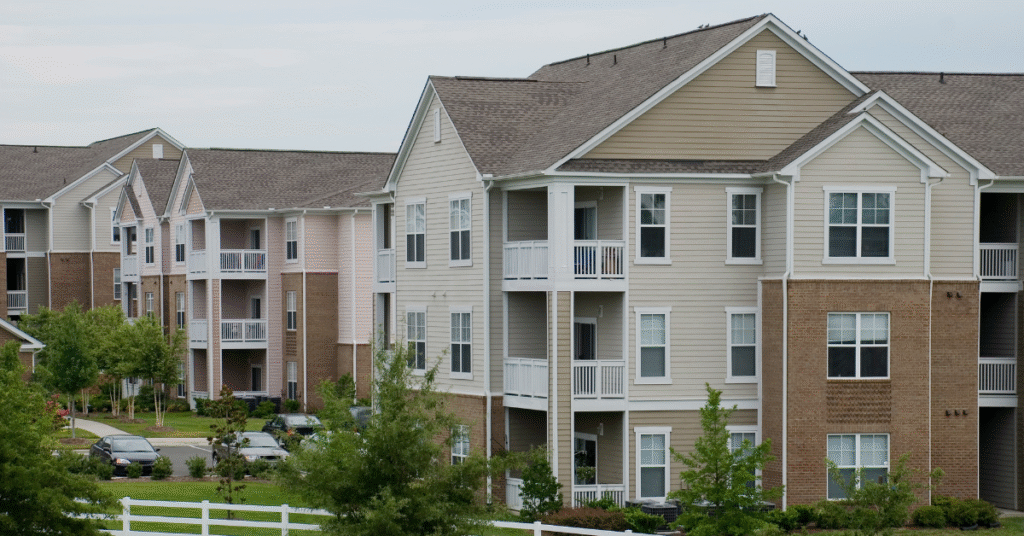

Housing Constraints Are Driving Multifamily Demand

Housing Constraints Are Driving Multifamily Demand

For investors seeking stable cash flow and long-term value creation, multifamily real estate continues to stand out as one of the most resilient and strategically positioned asset classes. Against the backdrop of affordability challenges in the single-family market and an ongoing national housing shortage, multifamily properties are playing an increasingly critical role in meeting U.S. housing demand.

Single-Family Challenges Drive Multifamily Growth

Homeownership remains aspirational, but affordability continues to be the central barrier. While mortgage rates have recently eased to 6.58% on a 30-year fixed loan, elevated borrowing costs have kept many middle-income households on the sidelines. 

The result: single-family home sales declined 2.7% in June, according to the National Association of Realtors, even as inventories reached 20-year highs, while the median new home price fell 6.2%, reflecting ongoing softness in the market.

For those allocating capital: when purchasing a home is out of reach, households rent instead. Multifamily real estate stands ready to absorb this demand and provide dependable returns.

This highlights how multifamily demand is becoming a central driver of investment performance in today’s housing market.

Growing Demand Supports Multifamily Performance

The multifamily sector has responded with strength. In Q2 2025, net absorption rose 47% year-over-year, marking the highest second-quarter performance in over three decades. Vacancy declined to 4.1%, well below long-term averages, despite elevated levels of new construction. Effective rents are rising again, with June registering the fastest annual increase since mid-2023.

These dynamics reflect both cyclical and structural tailwinds. Cyclically, multifamily benefits as single-family affordability declines. Structurally, the U.S. remains short an estimated 2 million homes, with unmet demand concentrated in growth markets across the Sun Belt, Southwest, and Midwest.

Navigating Today’s Market Environment

While demand is strong, today’s investment environment requires selectivity. Elevated construction pipelines in certain metros are likely to put short-term pressure on vacancy rates and temper rent growth. Forecasts for 2025 call for national rent growth of 2.2%, slightly below the historical average, as supply continues to be absorbed.

On the capital markets side, transaction volume is expected to rebound moderately in 2025, reaching $370–$380 billion. This is being driven by loan maturities requiring refinancing, sidelined capital reentering the market, and increasing price stability. For investors, this creates a window to acquire quality assets in strong locations at more attractive entry points than were available just two years ago.

Strategic Takeaways

  1. Prioritize Fundamentals Over Headlines: Focus on metros with strong job growth, diversified economies, and limited new supply. These markets are best positioned to deliver durable returns.
  2. Be Selective on Timing: Elevated supply is a short-term factor. Investors with a medium- to long-term horizon stand to benefit as new construction moderates in 2026 and beyond.
  3. Evaluate Risk-Adjusted Returns: With spreads narrowing, look closely at sponsor experience, leverage levels, and deal structures. In this environment, execution matters more than ever.

For high-net-worth investors balancing wealth preservation with growth, multifamily real estate continues to present a compelling opportunity. The sector’s resilience amid economic uncertainty, coupled with structural housing shortages and demographic demand, positions it as a core component of a diversified investment strategy.

As affordability challenges persist in the single-family sector, multifamily is not just filling the gap—it is shaping the future of U.S. housing. For investors, that means a chance to position capital where long-term demand is both clear and durable.

When You’re Ready… Here’s 3 Ways We Can Help:

  1. Connect With Our Team: Whether you’re exploring passive real estate for the first time or you’re a seasoned investor looking for a trusted partner, our team is available to answer your questions. Schedule a confidential strategy call to learn more about our investment philosophy, current opportunities, and how we help investors achieve income, growth, and tax efficiency.
  2. Join Our Private Investor Portal: Gain exclusive access to our current offerings and ongoing pipeline of multifamily investments. Inside, you’ll find detailed financials, market insights, and structured deal overviews—all designed to help you make informed, confident decisions about where to place your capital.
  3. Review Our Investment Strategy: Get a clear understanding of how we source, underwrite, and manage multifamily assets. Our strategy is built around long-term wealth creation, consistent passive income, and disciplined risk management. Learn what sets us apart and why sophisticated investors choose to partner with us.

Why Market Cycles Matter and What They Signal for Multifamily Investors

Multifamily Market Cycles

Most investors know markets don’t move in straight lines. Real estate, in particular, runs in cycles, rising, peaking, correcting, and recovering in a rhythm that can swing prices by 30% or more over the course of a decade. For multifamily investors, staying attuned to multifamily market cycles is critical. It shapes not just when we buy or sell, but also how we position capital to maximize returns and manage risk.

The Four Phases of the Real Estate Cycle

Like the broader economy, real estate tends to repeat four phases:

  1. Recovery – The market begins to heal after a downturn. Vacancies start to tighten, rents stabilize, and confidence creeps back.
  2. Expansion – Growth kicks in. Rents rise, demand is strong, and new development ramps up. This is often the most optimistic—and competitive—phase.
  3. Hypersupply – Builders overshoot, supply outpaces demand, and vacancies creep higher. Rent growth slows or stalls.
  4. Recession – Excess supply and weaker demand push values and rents lower. Distress emerges, but so do some of the best long-term opportunities.

Each phase offers opportunities, but the right strategy depends on where the market stands.

Where We Are in 2025

Looking across today’s market, we’re somewhere between late correction and early recovery. The rapid interest rate hikes of the past two years slowed home sales and pressured multifamily rent growth in several high-growth metros. In some Sun Belt markets, year-over-year rents have even dipped. Meanwhile, tighter credit conditions and maturing loans are creating stress for owners who bought at peak valuations.

At the same time, supply pipelines are starting to thin, demographic demand remains strong, and inflation is easing. History suggests these are the ingredients that set the stage for the next recovery.

What the Past Teaches Us

If we look back over the last 25 years, the pattern is familiar:

  • Early 2000s Expansion: Strong growth, easy credit, and overbuilding.
  • 2007–2011 Downturn: Prices corrected sharply, creating once-in-a-generation buying opportunities.
  • 2012–2019 Expansion: One of the longest growth cycles in history, with multifamily at the forefront.
  • 2020–2022 Surge: Pandemic-driven demand and low rates fueled record rent growth and appreciation.
  • 2023–2025 Reset: Higher borrowing costs and affordability challenges are forcing a reset in pricing.

Cycles repeat. The investors who consistently outperform are those who act when uncertainty is high, rather than waiting for headlines to turn positive.

Preparing for the Next Phase

If we are indeed moving into early recovery, this is the time to sharpen pencils and prepare for opportunities:

  • Keep liquidity ready – Distressed and recapitalization deals are already emerging as loans mature.
  • Focus on strong markets – Job growth, population inflows, and supply-constrained areas will rebound fastest.
  • Lean into value-add – Repositioning well-located assets during recovery often delivers outsized returns.
  • Watch rates closely – As the Fed eases, lower borrowing costs could accelerate the next expansion.

Final Thoughts

Real estate is cyclical by nature. Prices rise, correct, and recover. It’s a pattern we’ve seen repeatedly. What matters is how we respond.

Today’s environment is uncertain, but uncertainty is often the prelude to opportunity. For multifamily investors with patience, discipline, and capital at the ready, the next cycle could prove especially rewarding.

Now is the time to prepare, so that when the market begins its next leg up, you’re positioned to take advantage.

When You’re Ready… Here’s 3 Ways We Can Help:

  1. Connect With Our Team: Whether you’re exploring passive real estate for the first time or you’re a seasoned investor looking for a trusted partner, our team is available to answer your questions. Schedule a confidential strategy call to learn more about our investment philosophy, current opportunities, and how we help investors achieve income, growth, and tax efficiency.
  2. Join Our Private Investor Portal: Gain exclusive access to our current offerings and ongoing pipeline of multifamily investments. Inside, you’ll find detailed financials, market insights, and structured deal overviews—all designed to help you make informed, confident decisions about where to place your capital.
  3. Review Our Investment Strategy: Get a clear understanding of how we source, underwrite, and manage multifamily assets. Our strategy is built around long-term wealth creation, consistent passive income, and disciplined risk management. Learn what sets us apart and why sophisticated investors choose to partner with us.